
What Is a Purchase Invoice? Meaning, Example & Easy Ways to Manage It
What Is a Purchase Invoice? Meaning, Example & Easy Ways to Manage It
If you are a business owner, then knowing what a purchase invoice is will be helpful for you. This is for tracking expenses, managing merchants, and staying in accordance with tax regulations.
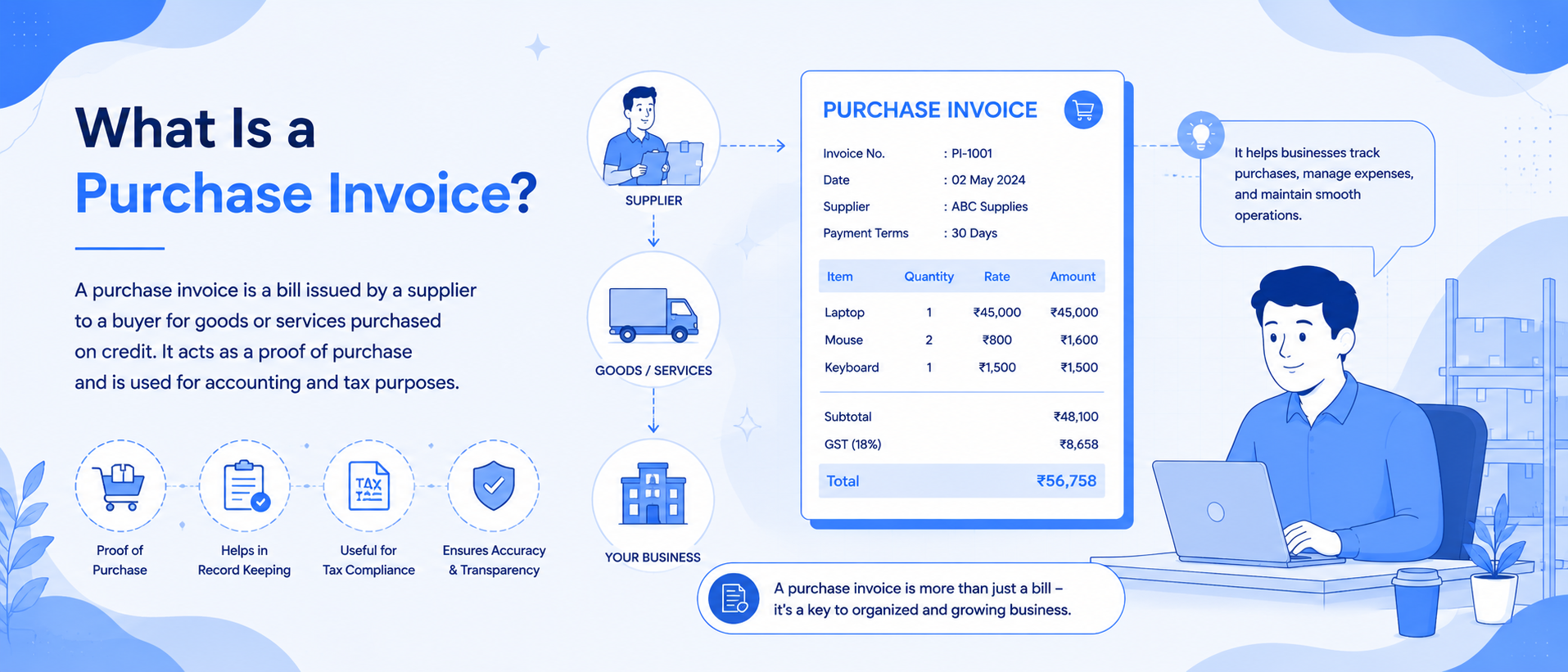
A purchase invoice is a document issued by a seller when goods or services are purchased. It stores important details like item description, quantity, tax, and payment terms.
We will, through this blog, explain the purchase invoice's meaning and discuss its role in accounting, compare it with a sales invoice, and share easy ways to handle purchase invoices efficiently.
So, letΓÇÖs start
What Is a Purchase Invoice?
LetΓÇÖs begin with giving the answer to the most common question that is what is a purchase invoice?
Purchase invoice is a document sent by a seller to a buyer for goods or services purchased.
From the buyerΓÇÖs perspective, it is proof of purchase and a statement of expense.
In simple words:
A purchase invoice is the bill you receive when you buy something. So when someone asks about the purchase invoice meaning, it simply refers to the official document that confirms a business purchase transaction.
What Is a Purchase Bill?
Now, letΓÇÖs talk about the purchase bill, as this is also just like the purchase invoice bill that represents a document showing what was purchased and the amount you need to pay.
But in accounting terms, a purchase invoice is usually used in formal bookkeeping. So, now what is a purchase invoice in accounting?
In accounting, a purchase invoice is recorded when a business buys goods or services on credit. It produces:
An expenditure entry
A liability entry (Accounts Payable)
Accounting Treatment
When a purchase invoice is received:
Account Type Impact
Expense/Purchase A/c: Debited
Accounts Payable: Credited
This is why purchase invoices in accounting play a crucial role in financial records. It ensures that expenses are recorded properly and liabilities are monitored accurately.
Why Purchase Invoices Are Important?
Purchase invoices are important for businesses, as they help them to stay organized financially. Here we have mentioned the reason for the same:
Expense monitoring
Every business expense can be recorded using purchase invoices. Without them, financial statements will be inaccurate.
Tax compliance
Purchase invoices help claim Input Tax Credit (ITC) under GST for any business.
Cash flow management
Purchase invoices show how much money is payable to vendors and when.
Vendor management
Businesses can track supplier payments and avoid conflicts.
Financial reporting
They contribute to Profit & Loss statements and balance sheets.
Purchase Invoice vs Sales Invoice
Many people confuse purchase invoices with sales invoices. LetΓÇÖs clarify.
Easy Tip
The same document is a sales invoice for the seller and a purchase invoice for the buyer.
Common Mistakes in Managing Purchase Invoices
Even though the purchase invoice meaning is simple, businesses often make errors:
Business might lose actual invoices
They may add wrong invoice amounts
Duplicate entries can be made.
Sometimes GST details can be missing
Delaying in payments
These mistakes can affect accounting accuracy and tax filings.
Easy Ways to Manage Purchase Invoices Efficiently
Here are useful tips for that can help in managing purchase invoices efficiently.
Use digital accounting software
As a business owner, you should avoid manual bookkeeping. Instead, use the digital software or tools that reduce errors and track payments automatically.
Maintain proper file system
Maintain the proper store invoices digitally; you can do so by month or vendor name.
Automate data entry
Scan invoices and use optical character recognition (OCR) tools to auto-fill data.
Set payment reminders
Avoid late fees by tracking due dates.
Reconcile monthly
Match purchase invoices with supplier statements regularly.
Tips for Better Purchase Invoice Management
Always verify the supplier's GST number
Cross-check quantity and price before recording
Avoid backdated entries
Keep both soft and hard copies
Review outstanding payables weekly
Is Digital Purchase Invoice Management Right for Your Business?
If your business:
Has multiple vendors
Works with GST on a regular basis
Makes frequent purchases
Makes errors in manual bookkeeping
Then implementing automated solutions will make a world of difference.
Businesses can greatly benefit from organized tracking of purchase invoices because it helps avoid confusion in financials during the time of audits or tax returns.
Final Thoughts
A purchase invoice is more than a bill; it is a very important financial document that records the expenses of the business.
Purchase invoice always shows the creation of a liability and helps in proper accounting treatment.
But doing all the things manually can result in delays in time, lost payments, tax issues, and inaccuracies. But using Pilloo AI can help businesses to deal with all these things easily and accurately.
Frequently Asked Questions (FAQs)
What is a purchase invoice explained in simple terms?
A purchase invoice is a bill that is received from a supplier for the purchase of goods or services on credit.
What is a purchase bill?
A purchase bill is another name for a purchase invoice. It is the same thing and represents the document that contains information about purchases made.
What is a purchase invoice in accounting?
In accounting, a purchase invoice is an entry for an expense that results in an accounts payable account in the accounting books.
Is a purchase invoice the same thing as a receipt?
No. A purchase invoice is a request for payment, while a receipt is proof that the payment has already been made.
Why is a purchase invoice significant in GST?
It is used for claiming Input Tax Credit.
Can businesses handle purchase invoices manually?
Yes. However, there are chances of errors if it is done manually.
Ready to automate your billing and collections?
Join thousands of smart businesses using Pilloo to create invoices via voice and recover payments on autopilot.